Most people start looking into retractable awnings because their patio is unbearable in the afternoon heat. That is a fair reason. But it is rarely the reason they are still glad they installed one three years later.
The shade is the obvious part. What keeps homeowners satisfied long after the novelty wears off are the benefits they did not see coming. The lower energy bills. The furniture that does not need replacing every two years. The extra square footage of living space that suddenly gets used. The way the house looks from the street.
If you are weighing whether a retractable awning is worth the investment, the shade question is almost beside the point. Here is what the decision actually comes down to.
What Makes a Retractable Awning Different From Other Shade Solutions
Before getting into the benefits, it is worth being clear about what a retractable awning is and what sets it apart from the alternatives.
A retractable awning is a fabric canopy mounted to an exterior wall or soffit that extends outward over a patio, deck, or door and retracts back when not in use. Unlike a pergola, a fixed patio cover, or a shade sail, a retractable awning gives you full control over when the shade is deployed and when it is not. That flexibility is what makes nearly every benefit on this list possible.
A fixed structure shades your patio whether you want it shaded or not. A retractable awning works on your terms.
Your Outdoor Space Becomes Genuinely Usable
This is the benefit everyone expects, but most people underestimate how much it actually changes their daily life.
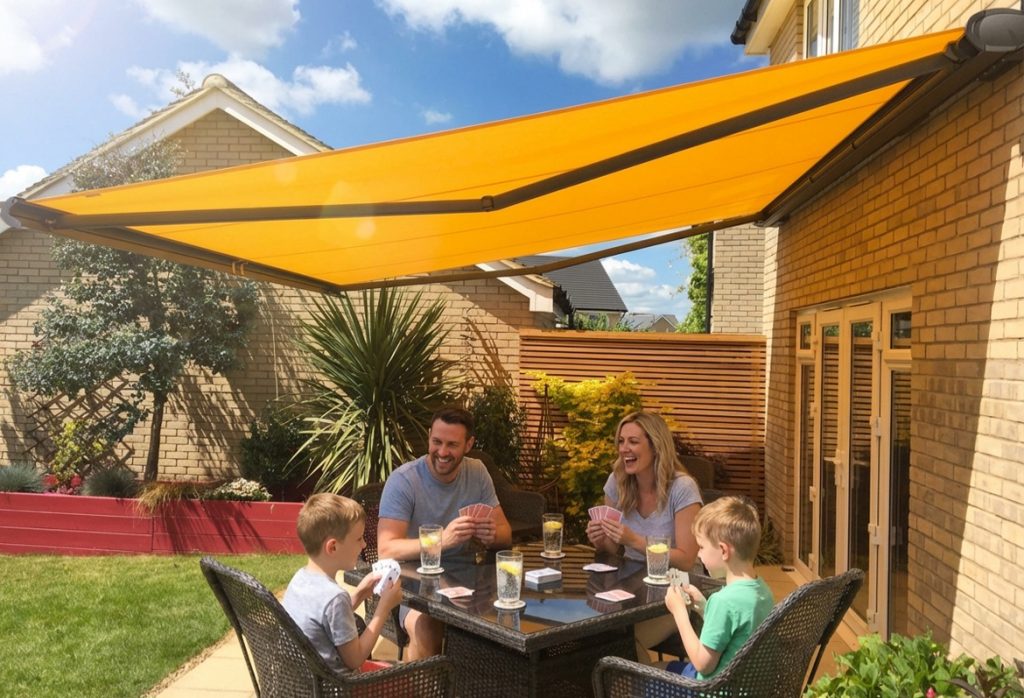
An effective retractable awning can extend anywhere from 8 to 20 feet out from your wall depending on the model and configuration, covering a substantial area of outdoor space in consistent, adjustable shade. That is not a strip of shadow along one edge of your patio. That is a covered outdoor room that you can actually furnish, eat in, entertain in, and spend a full afternoon in without retreating inside.
For homeowners in hot climates, this translates to months of additional usable time outdoors. Spaces that previously sat empty from late spring through early fall become functional parts of the home. Morning coffee that was getting skipped becomes a daily ritual. Evening gatherings that ended early because of the heat last longer.
The square footage of your home does not change. The way you live in it does.
Energy Costs Go Down When You Block Heat at the Source
This is the benefit that surprises most homeowners, and it is one of the most well-documented advantages of retractable awnings.
When direct sunlight hits your windows and glass doors for several hours a day, your home absorbs that heat and your air conditioning system works harder to compensate. The US Department of Energy has found that window awnings can reduce solar heat gain by up to 65 percent on south-facing windows and up to 77 percent on west-facing exposures. That reduction in heat load means your cooling system runs less, and your energy bill reflects it.
The retractable design amplifies this benefit in a way that fixed awnings and permanent structures cannot. In warmer months, you extend the awning during peak sun hours to block heat gain. In cooler months or on overcast days, you retract it and let natural light and warmth into your home. You are not permanently sacrificing passive solar heating to get summer shade. You are managing both, seasonally, on demand.
Over the course of a year in a warm climate, this kind of control over solar heat gain can produce meaningful savings. Over the lifespan of a quality awning, those savings become a significant part of the return on your investment.
Your Outdoor Furniture and Flooring Last Longer
UV exposure is one of the most expensive and least discussed costs of having an outdoor space in a sunny climate. Cushion fabric fades and breaks down. Outdoor rugs lose their color and structural integrity. Composite decking discolors. Wood surfaces dry out and crack. Even materials marketed specifically for outdoor use take a measurable beating under sustained UV exposure.
A retractable awning significantly reduces the ultraviolet radiation hitting everything beneath it whenever it is deployed. That means the furniture you invested in holds up longer before needing to be replaced. The flooring on your deck or patio retains its appearance and integrity through more seasons. The planters, the rugs, the accessories, all of it lasts longer under cover than it does in direct sun.
This is not a dramatic difference after one summer. But stretch it out over four or five years and the cost of what you did not have to replace starts to look a lot like the cost of the awning itself.
Retractable Awnings Add Real Value to Your Home
Outdoor living space has become one of the more consistent drivers of buyer interest in the residential real estate market. Covered, usable outdoor areas photograph well, show well, and signal to prospective buyers that a home has been thoughtfully maintained and upgraded.
A retractable awning contributes to that impression in a visible and practical way. It is not cosmetic in the way a fresh coat of paint is cosmetic. It is a functional upgrade to an area of the home that buyers increasingly factor into their decisions.
In markets where outdoor living is part of the lifestyle, and Florida is at the top of that list, a well-specified retractable awning over a patio or deck adds to the overall appeal of a property in a way that can influence both selling price and time on market.
It will not single-handedly transform your home’s value. But it contributes to the kind of overall presentation that makes buyers feel like they are getting a home that has been cared for and improved, and that impression has real dollar weight in a competitive market.
They Handle Weather Better Than Most People Expect
A common hesitation around retractable awnings, particularly in storm-prone climates, is durability. It is a fair concern and worth addressing directly.
Retractable awnings are not designed to be left extended during high winds or heavy rain. That is not a design flaw. It is the nature of a fabric structure, and most quality awnings are built with that reality in mind. Many models include wind sensors that automatically retract the awning when wind speeds exceed a safe threshold, removing the need to monitor conditions manually.
When retracted, a retractable awning with cassette housing is well protected from the elements. The fabric is enclosed, the mechanism is shielded, and the awning is not exposed to wind, debris, or UV degradation. That protected storage is a significant part of why a quality retractable awning lasts as long as it does in climates that would destroy a cheaper, unprotected alternative within a season or two.
For severe weather events, retractable awnings should be fully retracted and secured. For the ordinary unpredictability of afternoon storms and shifting winds that most climates deal with on a regular basis, a well-built retractable awning with appropriate sensors handles itself without requiring you to babysit it.
The Aesthetic Impact Is More Than Skin Deep
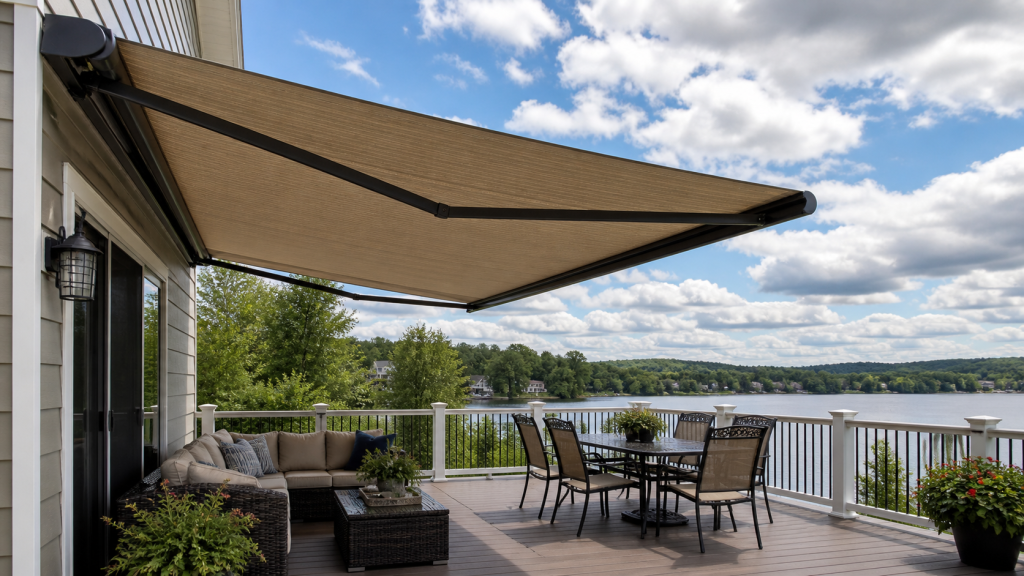
A retractable awning changes how your home looks, and more importantly, how your outdoor space feels. The right fabric color and pattern can tie a patio together in a way that makes the space look intentional rather than assembled from whatever was on sale.
Beyond the visual aspect, there is something that happens to an outdoor space when it has a proper overhead element. It feels like a room. Defined, sheltered, purposeful. That shift from open slab or exposed deck to covered outdoor living area changes how people use the space and how often they gravitate toward it.
A space that looks and feels finished gets used. A space that looks unfinished or exposed tends to be avoided, regardless of how much money was spent on it.
The Flexibility Is the Point
Every benefit on this list flows from one core feature: a retractable awning works on your terms.
You extend it when the sun is brutal and retract it when the weather cools and you want open sky. You shade the patio for an afternoon cookout and then open it back up for stargazing in the evening. You block solar heat gain in the peak of summer and let light into your home through the winter. None of that is possible with a fixed structure.
That flexibility is what separates a retractable awning from every other shade solution on the market, and it is what makes the list of benefits so much longer than most people anticipate before they have one installed.
What to Look For When Buying a Retractable Awning
Not all retractable awnings are built the same, and the differences matter significantly over time.
Fabric quality is the starting point. Look for solution-dyed acrylic fabrics that are UV-resistant, mold-resistant, and colorfast. The fabric is the part of the awning that takes the most punishment and the part most likely to disappoint if you cut corners on it.
The frame and arm construction determines how well the awning holds its position in mild wind and how long the mechanism lasts through repeated extension and retraction cycles. Powder-coated aluminum is the standard for quality units. Anything thinner or cheaper will show its limitations within a few years.
Cassette housing, which encloses the rolled awning when retracted, is not just an aesthetic feature. It protects the fabric and motor from UV degradation, bird droppings, moisture, and debris when the awning is not in use. An awning without cassette housing ages faster and shows it.
If you are considering a motorized unit, which offers significant practical advantages over manual operation, pay attention to the motor brand and warranty terms. The motor is the most mechanically complex component of the system and the one most likely to need attention over time.
Finally, professional installation matters more than most buyers realize. An awning mounted incorrectly or to an unsuitable surface is a liability, not an asset. The wall attachment points carry real load when the awning is extended and exposed to wind, and that installation needs to be done right.
Why Bradenton Homeowners Have More to Gain Than Most
Everything discussed in this article applies broadly to homeowners in any warm, sunny climate. But for those living in and around Bradenton, Sarasota, and Florida’s Gulf Coast, the benefits of a retractable awning are amplified by the specific conditions of the region.
The intensity and duration of Gulf Coast sun is not comparable to most of the country. The outdoor living culture here means that patio and deck space is not optional square footage but a central part of how people use their homes. The combination of heat, UV exposure, humidity, and unpredictable afternoon weather makes a well-built, properly installed retractable awning one of the more practical investments a Florida homeowner can make.
The math is straightforward. You have outdoor space. Florida weather is working against you using it. A retractable awning changes that equation, and the benefits extend well beyond having somewhere to sit in the shade.
If you are ready to get more out of your outdoor space, explore our retractable awning services here to see the SunPro systems we install across Bradenton, Sarasota, Lakewood Ranch, and the surrounding Gulf Coast communities, or call us at (941) 398-1286 to schedule your free in-home estimate. Right now we are offering $750 off, and installation can be completed in as little as two weeks.